Ukrainian social media platforms are flooded with war memes that blend dark humor with real-life events, sparking both online engagement and public debate. The trend, which has gained traction since early 2024, sees users repurposing images and videos from the ongoing conflict to create content that ranges from satirical to deeply offensive. The phenomenon has drawn attention from local media and international observers, with some calling it a form of coping, while others warn it risks trivialising the human cost of war.
War Memes: A New Form of Digital Expression
The rise of war memes in Ukraine reflects a broader shift in how citizens engage with the conflict. With over 60 million active internet users in the country, platforms like Facebook, Telegram, and Vkontakte have become hubs for this new form of content. One example is the "Zelenskyy vs. Putin" meme series, which has been shared over 2 million times on Telegram alone. The memes often depict the Ukrainian president in absurd or exaggerated scenarios, sometimes juxtaposed with images of military action.
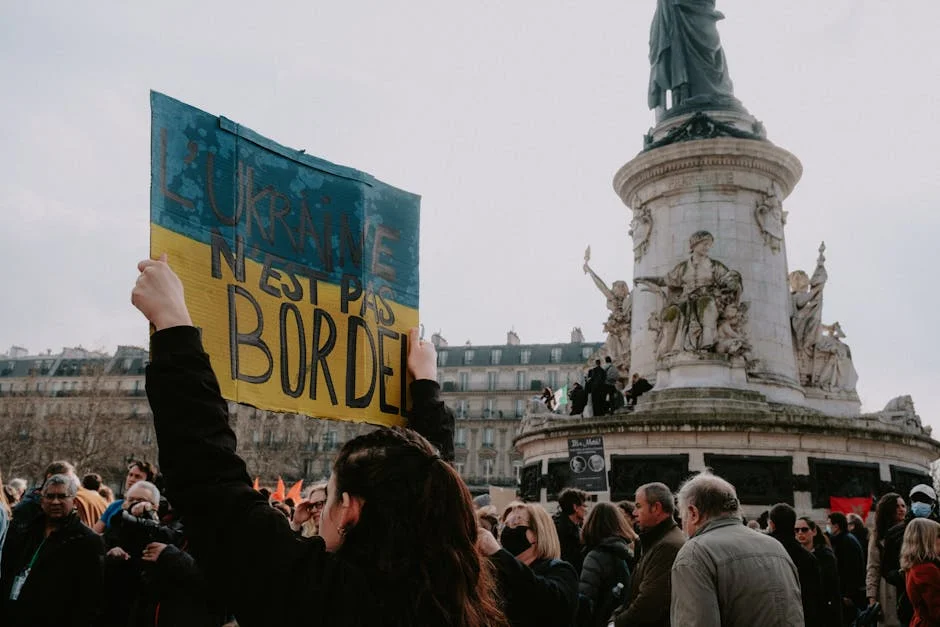
“It’s a way to process the chaos,” said Olena Kovalyova, a 34-year-old teacher in Kharkiv. “We’re living through a war, and sometimes the only way to make sense of it is through humor.” However, not everyone shares this view. Some see the memes as disrespectful to the millions affected by the conflict. “This isn’t a joke,” said Mykola Ivanov, a volunteer with the Red Cross in Kyiv. “People are losing their homes, their families, their lives.”
Local Impact: Divided Opinions and Community Tensions
The spread of war memes has led to growing divisions within communities. In cities like Dnipro and Odesa, local forums have become battlegrounds for debates over the appropriateness of such content. Some residents argue that memes help maintain morale, while others say they desensitise people to the reality of war. In one instance, a local school in Lviv faced backlash after a student shared a meme referencing a recent bombing. The incident led to a public discussion about the role of humor in times of crisis.
The Ministry of Information Policy has not officially commented on the trend, but officials have expressed concern about the potential for misinformation. “We must be cautious,” said a spokesperson. “Memes can spread false narratives quickly, especially when they are shared without context.” This has led to calls for greater digital literacy among young users, who make up a large portion of social media activity in Ukraine.
Regional Effects: A Reflection of Broader Trends
The phenomenon is not unique to Ukraine. Similar trends have been observed in other conflict zones, including Syria and Afghanistan. However, in Ukraine, the scale and speed of meme creation are unprecedented. According to a 2024 report by the Kyiv School of Economics, 72% of Ukrainian internet users engage with political content online, with memes being a significant part of that engagement.
Analysts say the trend is a double-edged sword. On one hand, it allows people to express their views and share experiences in a way that traditional media often cannot. On the other, it can distort public perception and lead to misinformation. “Memes are a form of storytelling,” said Dr. Natalia Maksymenko, a media studies professor at Kyiv-Mohyla Academy. “But when they are based on incomplete or misleading information, they can have real consequences.”
Public Response and Social Media Platforms
Some social media platforms have taken steps to address the issue. Telegram has introduced a moderation policy that blocks certain types of content, while Facebook has increased its fact-checking efforts. However, enforcement remains inconsistent, and many users argue that these measures are not enough. “It’s a free speech issue,” said Andriy Shevchenko, a digital rights advocate in Kyiv. “We need to find a balance between protecting users and allowing free expression.”
Local influencers have also played a role in shaping the conversation. One such figure, @WarMemeMaster, has over 500,000 followers and has been both praised and criticised for his content. His posts often include a disclaimer: “This is not a reflection of the real situation, but a way to cope.”
What Comes Next: The Role of Regulation and Public Awareness
As the trend continues, the Ukrainian government and civil society are looking for ways to manage its impact. A new draft law on digital content is currently under review, with proposals to increase accountability for creators who spread false or harmful information. If passed, the law could set a precedent for how other countries handle similar issues.
For now, the debate over war memes shows no sign of slowing. As the conflict in Ukraine continues, the role of digital content in shaping public opinion will only grow. What remains to be seen is whether the country can find a way to harness the power of memes without losing sight of the real human cost of war.