Tamil Nadu’s 2026 election campaign has intensified in the Paramakudi constituency, where voters are grappling with inadequate roads, limited healthcare access, and underfunded schools. Despite promises from both major political parties, residents say the region’s infrastructure gaps remain unaddressed, raising concerns about the impact on daily life and economic growth. The state government has announced a new infrastructure plan, but critics argue it is too late to make a difference before the polls.
Infrastructure Gaps Leave Residents Frustrated
Paramakudi, a coastal town in Ramanathapuram district, has long struggled with poor road connectivity. A recent report by the Tamil Nadu Rural Development Ministry noted that over 60% of local roads are in disrepair, affecting both daily commutes and the transport of agricultural goods. "We can't even get a doctor here when someone falls ill," said S. Kumar, a local farmer. "The nearest government hospital is 40 km away, and the bus service is unreliable."
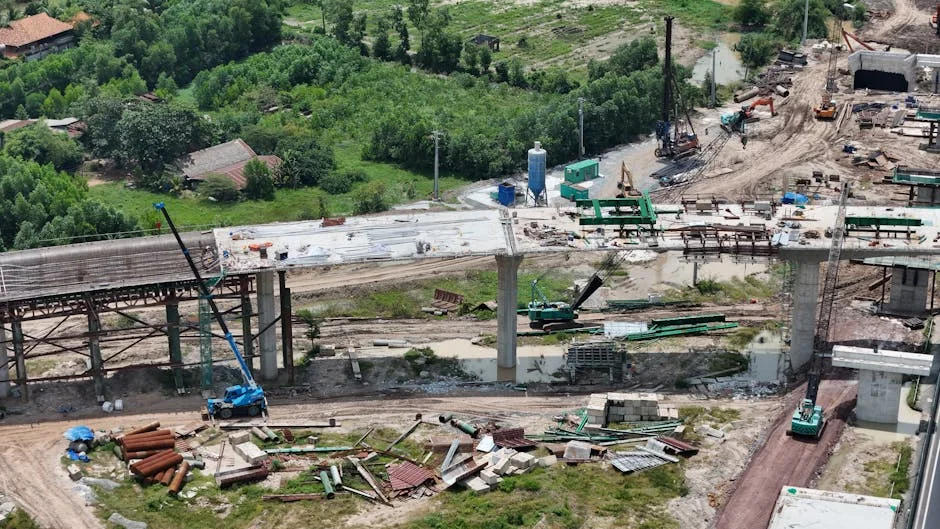
The lack of infrastructure has also hindered local businesses. According to a 2025 survey by the Tamil Nadu Chamber of Commerce, 70% of small enterprises in Paramakudi cited poor road conditions as a major obstacle to growth. "Without proper roads, it's hard to move products to market," said Meenakshi Rajan, owner of a textile shop. "We’re stuck in a cycle of underdevelopment."
Political Promises vs. Reality
As the 2026 election approaches, both the ruling Dravida Munnetra Kazhagam (DMK) and the opposition All India Anna Dravida Munnetra Kazhagam (AIADMK) have made infrastructure development a key campaign promise. The DMK has pledged to invest ₹120 crore in road repairs and healthcare upgrades, while the AIADMK has proposed a ₹150 crore package for education and rural electrification.
However, many residents remain skeptical. "These are just words," said M. Sivakumar, a local schoolteacher. "We've heard similar promises before, but nothing ever changes." The Tamil Nadu government’s recent infrastructure plan, which includes a ₹500 crore investment in rural connectivity, has been welcomed by some but criticized for lacking a clear timeline.
Impact on Daily Life and Local Economy
The infrastructure challenges in Paramakudi have had a direct impact on the daily lives of its residents. A 2025 report by the Tamil Nadu Rural Development Institute found that 45% of households in the region rely on informal transport, often at high costs. "We spend more on commuting than on food," said Radha Raman, a local shopkeeper. "It's a burden we can't afford."
The local economy has also suffered. According to the Tamil Nadu State Planning Board, the region’s GDP growth rate has lagged behind the state average by 2.3% over the past five years. "Without better infrastructure, we can't attract investment," said R. Balasubramanian, an economist at the Tamil Nadu Institute of Development Studies. "This is a critical moment for Paramakudi."
Education and Healthcare in Crisis
Education and healthcare services in Paramakudi are also under strain. A recent audit by the Tamil Nadu Education Department found that over 30% of schools in the region lack basic facilities such as electricity and clean water. "Our children are learning in unsafe conditions," said Priya K. R., a parent. "We need urgent action."
Healthcare access is equally dire. The Paramakudi Primary Health Centre, the only government facility in the area, serves over 20,000 people but has only two doctors on staff. "We can't meet the needs of the population," said Dr. P. S. Rajan, the centre’s medical officer. "We’re stretched thin."
Community Response and Calls for Action
Local communities have started to mobilize, demanding better infrastructure and services. A recent protest led by the Paramakudi Residents’ Association called on the government to prioritize road repairs and healthcare upgrades. "We’re not asking for miracles," said Arun Kumar, a protest organizer. "We just want the basic services we deserve."
NGOs and civil society groups are also stepping in. The Tamil Nadu Rural Development Trust has launched a campaign to raise awareness about infrastructure challenges and push for policy changes. "This is a matter of justice," said N. Gopal, the trust’s director. "Every citizen deserves access to basic infrastructure."
What to Watch Next
As the 2026 election approaches, the focus on Paramakudi’s infrastructure challenges is likely to intensify. The state government has set a deadline of December 2025 for the first phase of road repairs, but many residents are skeptical about whether it will be met. Political parties will also face pressure to deliver on their promises, with voters closely watching how candidates address these issues.
See Also
- Swiggy Deliveries Hit Hard as Iran-Israel Conflict Sparks LPG Crisis
- CBSE Transfers Chairman, Secretary After OSM Procurement Probe Ordered
"This is a critical moment for Paramakudi." Education and Healthcare in Crisis Education and healthcare services in Paramakudi are also under strain. "We spend more on commuting than on food," said Radha Raman, a local shopkeeper.