India's population, which recently became the world's largest, is now expected to begin declining at a pace that has surprised demographers and policymakers alike. The United Nations Population Division released projections this year indicating that the country's population will peak and then contract more rapidly than earlier forecasts suggested. The reversal marks a historic inflection point for a nation that has added hundreds of millions of people over the past seven decades.
The Numbers Behind the Shift
India's population reached approximately 1.42 billion in mid-2023, according to UN data. That peak may prove to be the highest the country ever records. The national fertility rate has fallen from 3.4 children per woman in 1990 to roughly 2.0 today, according to the Sample Registration System conducted by the Office of the Registrar General of India. When the rate drops below 2.1, a population begins to shrink over time without immigration. India crossed that threshold only recently, but the decline is now expected to accelerate.
The speed of the fall matters. Demographers at the UN and at India's own Institute for Health Metrics and Evaluation have warned that once fertility rates drop this low, they rarely rebound. The country is following a pattern seen earlier in China, Japan, and South Korea, all of which experienced sharp demographic contractions after their own fertility collapses.
Regional Patterns Across the Country
The decline is not happening evenly across India. Southern states like Kerala and Tamil Nadu have already seen birth rates fall well below replacement level for more than a decade. In Kerala, the total fertility rate stands at around 1.4, among the lowest in the country. Northern states continue to have higher fertility, but the gap is narrowing as urbanisation spreads and education levels rise.
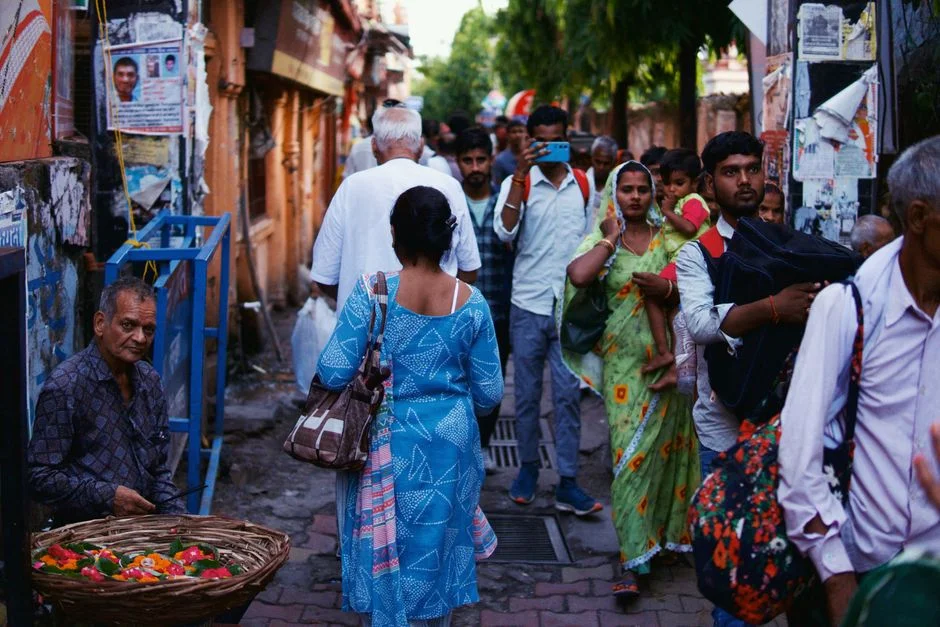
Mumbai, Delhi, and Bangalore illustrate how urbanisation is reshaping family size. Young adults moving to these cities for work tend to marry later and have fewer children than their parents did. The average household size in metropolitan areas has shrunk from 4.8 people in 2001 to 4.0 in 2011, and the trend has continued since.
How Education and Employment Are Changing Family Decisions
Women's education has become one of the strongest predictors of fertility decline. States where female literacy rates are highest consistently show the lowest birth rates. The National Family Health Survey has documented this link across multiple rounds of data collection. As more girls stay in school longer and enter the formal workforce, families choose to have fewer children.
Economic uncertainty is also playing a role. Young couples in cities like Pune, Hyderabad, and Chennai report that the cost of raising a child, from schooling to housing, makes large families financially impractical. Surveys conducted by local research groups in those cities found that most urban couples intend to have no more than two children.
What a Shrinking Population Means for Workers
India has long relied on what economists call its demographic dividend — a period when a large working-age population supports a smaller number of dependents. That window is closing. The number of people entering the labour force each year is expected to fall significantly over the next twenty years. By 2040, according to projections by the National Commission on Population, the ratio of workers to dependents will look very different from what it looks today.
Companies that built their business models around India's young and growing consumer base are already reassessing their strategies. Consumer goods firms that sell products in large family sizes are developing new lines for smaller households. Real estate developers in Gurgaon and Noida are reconsidering apartment designs as demand for larger family homes weakens.
The Challenge of an Aging Society
Fewer children mean more elderly people relative to the total population. India already has over 340 million people aged 60 and above, a figure that is growing even as the total population plateaus. The old-age dependency ratio — the number of elderly people for every 100 working-age adults — will rise sharply.
Traditional family structures in India have always assumed that children, particularly sons, would care for aging parents. That assumption is weakening as nuclear families become the norm. In states like Maharashtra and Karnataka, surveys show that elderly parents increasingly live alone or with a spouse only, with adult children living in different cities.
The government has begun to acknowledge the scale of the problem. The Ministry of Social Justice and Empowerment launched a national programme for the elderly in 2023, expanding facilities for old-age homes and strengthening pension schemes. But the scale of funding required to meet future needs remains far larger than what is currently allocated.
Policy Responses and What Comes Next
India is not the first country to face this challenge, but its size makes the transition uniquely complex. China, which experienced its own fertility collapse, is now dealing with a shrinking workforce and a rapidly aging population. The Chinese government's attempts to reverse its birth rate decline with policy incentives have largely failed. India will be watching that experience closely.
Some analysts have proposed incentives to raise fertility, including cash bonuses for having children, free education, and expanded parental leave. Others argue that such measures rarely work and that resources would be better spent preparing for a smaller population. The debate within government circles remains unresolved, with different ministries favouring different approaches.
What is clear is that the demographic transition underway in India will reshape nearly every aspect of society. The economy, social services, urban planning, and political representation will all need to adapt to a country that is becoming smaller rather than larger. For citizens, the changes will touch daily life in ways that generations before them never experienced.
What to Watch in the Coming Years
The next major data release will come with the 2026 update from the UN Population Division, which will refine these projections based on the latest fertility surveys. India's own Census, long delayed, will also provide fresh population data when it is finally conducted. Those figures will determine how quickly governments at the state and national level need to move.
State elections in Uttar Pradesh and Maharashtra in 2027 are expected to feature debates about migration and welfare spending for aging populations. How political parties frame the demographic shift will shape public understanding and policy choices for years to come. Citizens in those states should watch whether any party puts forward specific proposals on eldercare, pension reform, or incentives for families.
See Also
- India Turns to Nigeria for Soybeans as Local Prices Surge by 30%
- Suvendu Adhikari Demands Modi Handhold Bengal Bureaucracy Rebuild
India will be watching that experience closely.Some analysts have proposed incentives to raise fertility, including cash bonuses for having children, free education, and expanded parental leave. For citizens, the changes will touch daily life in ways that generations before them never experienced.What to Watch in the Coming YearsThe next major data release will come with the 2026 update from the UN Population Division, which will refine these projections based on the latest fertility surveys.