Two people died when their BMW car smashed into a highway divider at approximately 250 kilometres per hour on the Mumbai-Vadodara Highway in Maharashtra on Saturday, police confirmed. The impact was so severe that both occupants were declared dead at the scene. The accident has reignited debates about speeding on India's national highways and the enforcement of traffic regulations.
The Crash and Immediate Aftermath
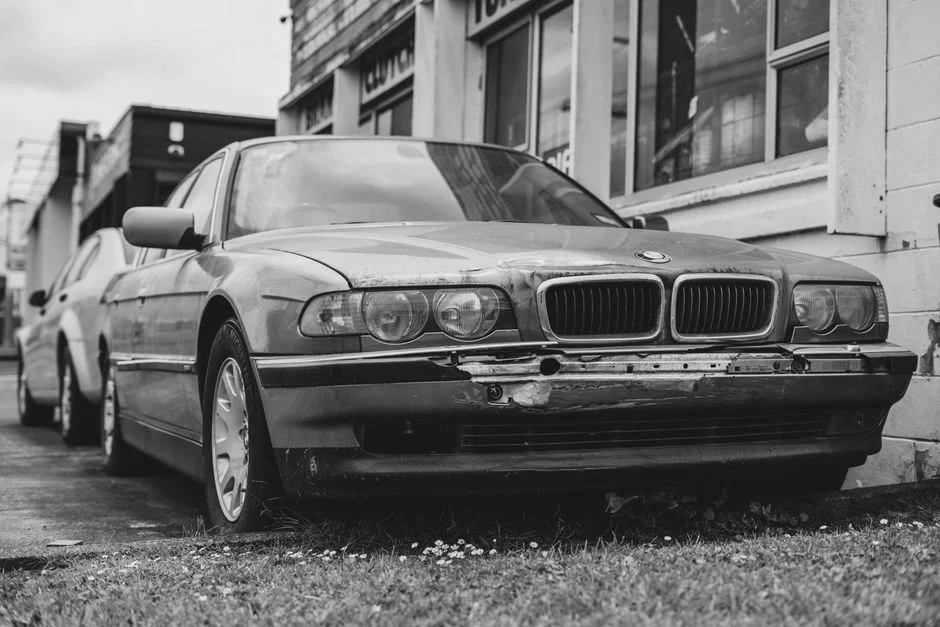
Emergency services rushed to the scene after the silver BMW collided with the central divider at extreme speed. Both victims, whose identities authorities have not yet released pending notification of next of kin, died instantly upon impact. The car sustained catastrophic damage, with its front section completely destroyed. Local residents reported hearing a loud explosion-like sound before discovering the wreckage.
Police arrived within twenty minutes and cordoned off the stretch of highway as investigators began reconstructing the events leading to the crash. The Mumbai-Vadodara Highway, a critical artery connecting two major cities in western India, sees thousands of vehicles pass through daily. Officials said the highway had to be partially closed for nearly three hours while teams cleared the debris.
Speed and Road Safety Concerns
The confirmed speed of 250 kmph has shocked investigators and road safety advocates alike. India's national highways typically enforce speed limits ranging from 80 to 120 kmph depending on the terrain and number of lanes. Exceeding such limits by more than double the prescribed maximum represents a serious violation that carries substantial penalties under the Motor Vehicles Act.
The crash occurred on a stretch of the highway that has witnessed multiple accidents over the years. Transport department officials in Maharashtra have previously flagged this particular route as a high-risk corridor where speeding incidents are common. Speed traps and surveillance cameras exist along certain sections, but advocates argue enforcement remains inconsistent.
The Debate Over Luxury Cars and Reckless Driving
The involvement of a BMW, a premium German automobile, has prompted questions about whether ownership of high-performance vehicles correlates with reckless driving behaviour. Insurance data shows that luxury cars are disproportionately represented in high-speed crash statistics across India. Experts suggest that the psychological effect of driving powerful machinery with minimal accountability contributes to dangerous behaviour.
Traffic police in major cities have struggled to penalise speeding effectively, with many violations going undetected due to insufficient monitoring infrastructure. The Mumbai-Vadodara Highway specifically lacks comprehensive speed surveillance systems across its entire length, leaving extensive sections without automated enforcement.
Official Response and Investigation
Maharashtra's transport minister issued a statement expressing condolences to the families of the deceased while directing transport department officials to submit a detailed report on the incident. The police have registered a case and launched an investigation to determine whether the driver was under the influence of alcohol or operating the vehicle recklessly.
Highway patrol officers confirmed that no other vehicles were involved in the collision, ruling out the possibility of a multi-car pileup. Investigators are reviewing CCTV footage from nearby toll plazas and petrol stations to establish the vehicle's trajectory before the crash. Preliminary findings suggest the car was travelling well above the legal speed limit for several kilometres before losing control.
Highway Conditions and Infrastructure
The Mumbai-Vadodara Highway forms part of National Highway 48, a crucial commercial route that handles significant freight traffic between Gujarat and Maharashtra. The highway has undergone multiple expansion projects over the past decade, with four-lane and six-lane sections replacing older two-lane stretches. Despite these improvements, safety infrastructure such as crash barriers, reflective signage, and emergency call boxes remains unevenly distributed.
Road safety engineers point out that median barriers on Indian highways vary considerably in their design and ability to prevent vehicles from crossing into oncoming traffic. Some sections feature rigid concrete dividers, while others use metal beam barriers that may not withstand impacts at very high speeds. The specific barrier type at the crash location will factor into the ongoing investigation.
Legal Framework and Penalties
Under India's amended Motor Vehicles Act, driving at speeds exceeding the prescribed limit by more than 40 kmph can result in fines of up to 2,000 rupees for first offences. Repeat violations carry steeper penalties including potential licence suspension. However, enforcement of these provisions varies dramatically across states, with many violations going unpunished due to inadequate monitoring systems.
Activists have long called for stricter accountability measures, including mandatory imprisonment for drivers found responsible for fatal accidents caused by excessive speeding. Maharashtra has piloted several road safety initiatives, but officials acknowledge that cultural attitudes toward speeding remain deeply entrenched among certain driver demographics.
What Happens Next
Police expect to complete their investigation within two weeks and have indicated that charges will be filed once the legal process determines responsibility. The transport department has announced plans to conduct an emergency audit of speed enforcement mechanisms along the Mumbai-Vadodara corridor. Speed checks will be intensified at known hotspots, and officials are considering deploying additional patrol vehicles during peak travel hours.
Road safety campaigners are watching the case closely, hoping it might catalyse stronger enforcement of existing traffic laws. Families who use this highway regularly for commuting and commerce have expressed frustration at the frequency of serious accidents on routes that should prioritising traveller safety. The outcome of this investigation and any policy responses will likely shape public debate about road safety regulation in western India for months to come.
See Also
- Delhi Government Reshuffles Over 40 Staff in Health Procurement Agency Amid Crisis
- Zambia Cancels Tech Summit — Local Businesses Face Sudden Shock
Preliminary findings suggest the car was travelling well above the legal speed limit for several kilometres before losing control.Highway Conditions and InfrastructureThe Mumbai-Vadodara Highway forms part of National Highway 48, a crucial commercial route that handles significant freight traffic between Gujarat and Maharashtra. Despite these improvements, safety infrastructure such as crash barriers, reflective signage, and emergency call boxes remains unevenly distributed.Road safety engineers point out that median barriers on Indian highways vary considerably in their design and ability to prevent vehicles from crossing into oncoming traffic.
What is the latest news about bmw crashes at 250 kmph on mumbaivadodara highway 2 killed?
Why does this matter for politics-governance?
What are the key facts about bmw crashes at 250 kmph on mumbaivadodara highway 2 killed?