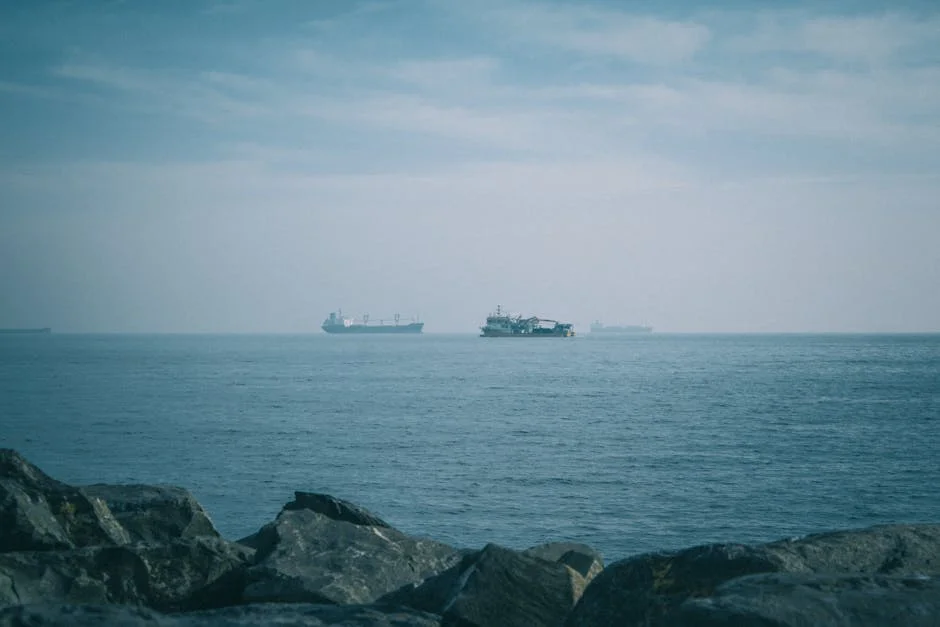
The Iranian Revolutionary Guard seized a commercial ship in the Strait of Hormuz on Monday, triggering immediate concerns over regional security and global trade. The incident, which occurred near the strategic waterway, has raised fears of a broader escalation in tensions between Iran and Western nations. The ship, flagged under a European company, was reportedly detained for alleged violations of international maritime laws, according to the Iranian Ministry of Foreign Affairs. The event has sent ripples through global markets and directly impacted fuel and shipping costs in India, particularly in Mumbai.
Strait of Hormuz: A Global Crossroads
The Strait of Hormuz, often referred to as the "world’s most critical oil chokepoint," is a narrow waterway between Iran and the United Arab Emirates. Over 20% of the world’s oil supply passes through this strategic location, making it a focal point for geopolitical tensions. The recent seizure of the ship has raised alarms among traders and analysts, who fear that any disruption in this region could lead to a spike in global energy prices. The Indian government has expressed concern over the incident, as India relies heavily on oil imports through the Strait.
“The Strait of Hormuz is not just a geographical feature — it is a lifeline for global energy security,” said Dr. Anjali Sharma, a maritime policy expert at the Indian Institute of Technology. “Any act of aggression here can have a cascading effect on economies, especially for countries like India that depend on stable oil supplies.”
Impact on Indian Citizens and the Economy
The incident has already begun to affect fuel prices in India, particularly in major cities like Mumbai and Kolkata. On Tuesday, the price of diesel in Mumbai rose by 3.5%, according to data from the Indian Oil Corporation. This increase has placed additional pressure on households and small businesses, which are already struggling with rising inflation. The Indian government has not yet issued a formal statement, but officials in the Ministry of Petroleum have been in close contact with international partners to monitor the situation.
For daily commuters and trucking companies, the price hike is a direct hit. “We are already paying more for fuel, and now this adds to our burden,” said Ramesh Patel, a transport operator in Mumbai. “We hope the government can find a way to stabilise prices before it gets worse.”
The economic ripple effect is also evident in the stock market. The Bombay Stock Exchange saw a 1.2% decline in energy sector stocks following the news. Analysts warn that if the situation escalates, the impact on India’s trade and manufacturing sectors could be severe.
Regional Tensions and Community Response
The Strait of Hormuz has long been a flashpoint for regional tensions, with Iran frequently clashing with the US and its allies over access and security. The recent ship seizure is the latest in a series of incidents that have raised concerns about the stability of the region. Local communities in coastal areas, such as the port city of Kandla in Gujarat, are closely watching the situation, as they rely heavily on maritime trade and shipping activities.
“We are worried about how this could affect our livelihoods,” said Ayesha Khan, a local fisherwoman in Kandla. “If there’s a blockage or a conflict, it could disrupt the entire supply chain.”
Community leaders have called for greater transparency and dialogue between nations. “We need to ensure that the rights of all nations are respected, but also that the flow of goods and energy is not disrupted,” said Rajesh Mehta, a representative of the Gujarat Chamber of Commerce.
What to Watch Next
The situation remains fluid, with international bodies such as the International Maritime Organization (IMO) monitoring the incident. The next few days will be crucial in determining whether the incident escalates into a broader crisis. India’s Ministry of External Affairs has also been in contact with its counterparts in the Gulf region to seek clarity on the situation.
For Indian citizens, the next few weeks will be critical. The government is expected to announce new measures to stabilise fuel prices and support affected sectors. Additionally, the global oil market will be closely watched for any signs of further disruption. As tensions in the Strait of Hormuz continue to rise, the impact on daily life in India and beyond will only grow more pronounced.
See Also
- UK Lords Postpone Assisted Dying Bill — Supporters Plan Next Steps
- Eucerin Ad Banned for Misleading Anti-Ageing Claim — Impact on Indian Market
What is the latest news about iran seizes ship in strait of hormuz fuel prices surge in mumbai?
Why does this matter for business-economy?
What are the key facts about iran seizes ship in strait of hormuz fuel prices surge in mumbai?