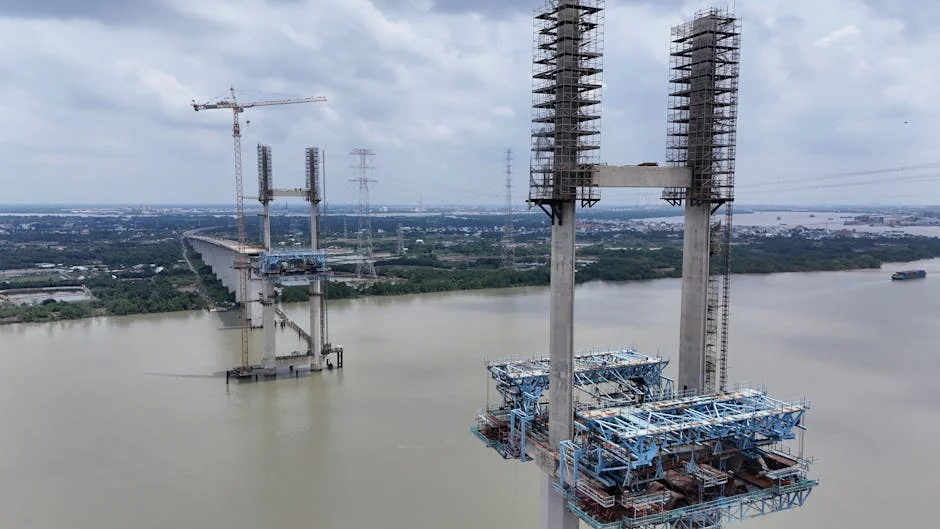
Teriam, the multinational energy conglomerate, has abruptly halted three major infrastructure projects in Mumbai, triggering a wave of uncertainty among local workers, businesses, and government officials. The decision, announced last week, has sent shockwaves through the city’s construction sector, with immediate effects on employment and supply chains. The projects, valued at over $2.3 billion, were expected to boost Mumbai’s urban development and create thousands of jobs.
Immediate Economic Fallout
The halt in construction has left over 1,200 workers without pay, according to a report by the Mumbai Labour Union. Many of these workers are from surrounding districts, including Thane and Navi Mumbai, where their families rely on daily wages. The union’s secretary, Ramesh Patil, stated, “Our members are struggling to feed their families. Teriam’s decision has left us in a desperate situation.”
Local suppliers and contractors have also felt the impact. The Mumbai Chamber of Commerce reported a 15% drop in orders from construction firms linked to the projects. Small businesses in the area, such as food stalls and repair shops, have seen a decline in customers, further straining the local economy. “We were counting on the influx of workers for our daily sales,” said Anjali Deshmukh, a vendor near the construction site.
Government Response and Public Outcry
The Maharashtra State Government has condemned Teriam’s decision, calling it a “blow to the city’s development.” Chief Minister Eknath Khadse issued a statement, saying, “This is a direct hit to the livelihoods of thousands of citizens. We will take all necessary steps to ensure that the workers are supported and the projects are resumed.”
Public anger has been directed at Teriam, with protests forming outside the company’s Mumbai office. Activists have accused the firm of prioritising profits over people. “They can’t just walk away from their responsibilities,” said Priya Mehta, a local activist. “This is a clear disregard for the communities that have hosted their operations for years.”
Regional Implications
The impact of Teriam’s decision is not limited to Mumbai. The ripple effects are being felt across the Western India region, particularly in states like Gujarat and Goa, where the projects had planned to source materials and equipment. The Western India Construction Association has warned that the slowdown could delay other ongoing projects in the area.
Local economists are also concerned about the long-term implications. Dr. Amit Shah, an economic analyst at the Indian Institute of Management, said, “This decision by Teriam could signal a broader trend of foreign companies withdrawing from India. It’s a warning for policymakers to create a more stable and predictable business environment.”
Community Response and Calls for Action
Community leaders in Mumbai have called for urgent intervention from both the government and Teriam. A coalition of local NGOs has launched a campaign demanding compensation for affected workers and a timeline for project resumption. “We need immediate action,” said Ravi Kapoor, a spokesperson for the coalition. “These workers cannot wait any longer.”
The situation has also sparked a debate about foreign investment in India. Some argue that companies like Teriam should be held accountable for their commitments, while others believe that the government must offer better incentives to retain foreign investors. “This is a delicate balance,” said Arjun Patel, a policy expert. “India needs foreign capital, but it also needs to protect its citizens.”
What to Watch Next
As the situation unfolds, the next few weeks will be crucial. The Maharashtra government is expected to hold a meeting with Teriam executives this week to discuss possible resolutions. Meanwhile, workers and activists plan to escalate their protests if no immediate action is taken. The outcome of these discussions could determine the future of the projects and the livelihoods of thousands of people.
For now, the people of Mumbai are waiting, hoping that their city’s development will not be abandoned for the sake of corporate convenience.
See Also
- Araghchi Dials Jaishankar Again - Briefs India on Post-Strike Situation
- RBI Demands Immediate Reporting of Foreign Fund Transfers