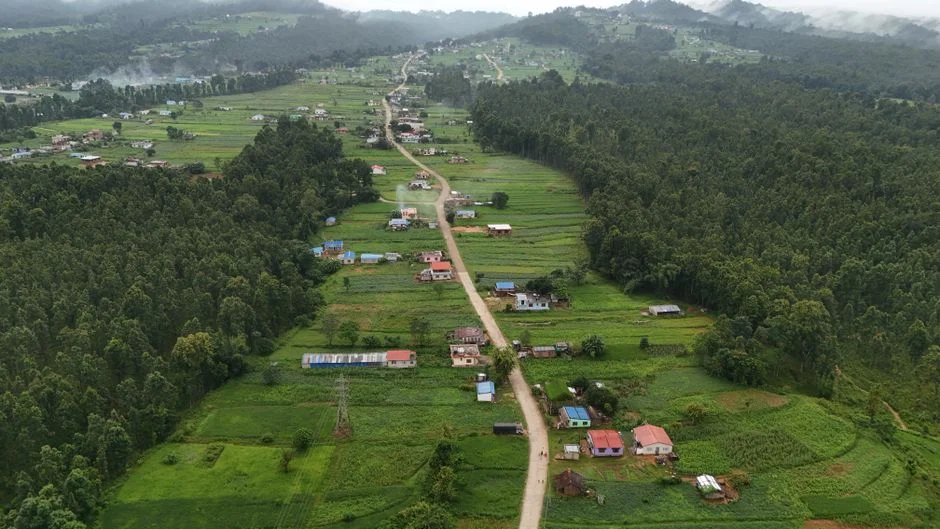
Cloud seeding operations kicked off in Karnataka's Haveri district on Tuesday, with six Members of the Legislative Assembly pooling resources to fund the weather modification exercise. The initiative aims to induce rainfall across one of Karnataka's most drought-affected regions, where agricultural communities have endured consecutive failed monsoons.
Legislators Step In as Drought Tightens Its Grip
The six MLAs from Haveri district jointly financed the cloud seeding programme after state-level drought relief measures failed to deliver sufficient rainfall. Local legislators confirmed the exercise would target specific cloud formations over the district using silver iodide flares. The operation comes as borewells run dry and kharif crop sowing faces severe delays across northern Karnataka.

Farmers in Haveri have reported losses exceeding Rs 50,000 per hectare in the last two growing seasons. The cloud seeding programme represents a direct intervention by elected representatives rather than waiting for central government assistance.
How Cloud Seeding Works in Karnataka
Weather modification aircraft will disperse silver iodide particles into moisture-laden clouds, encouraging precipitation. Officials involved in the programme stated the exercise would continue for approximately three weeks, depending on cloud conditions. The technology has been used in several Indian states, including Andhra Pradesh and Maharashtra, with mixed results.
Authorities selected Haveri based on historical rainfall deficit data and the concentration of rain-fed farmland in the region. The district receives an average of 680mm of rainfall annually, but recent years have seen totals fall well below that mark.
Local Impact on Farmers and Communities
Agricultural extension officers in Haveri confirmed that nearly 60 percent of the district's cultivated area depends entirely on monsoon rains. Without adequate precipitation by July, many farmers face the prospect of abandoning kharif plantings entirely. The cloud seeding programme arrives at a critical juncture for these rural communities.
Local markets in Haveri town have already begun adjusting seed and fertilizer prices in anticipation of reduced sowing activity. Rural credit default rates in the district have risen sharply over the past 18 months, placing additional pressure on smallholder farmers who lack irrigation alternatives.
Questions Over Effectiveness and Cost
Weather scientists have long debated the efficacy of cloud seeding in the Indian context. The Indian Meteorological Department maintains that while the technology can increase rainfall by 10 to 25 percent under optimal conditions, results vary significantly based on cloud type, wind patterns, and atmospheric moisture content.
The cost of the Haveri programme, shared among six MLAs, amounts to several lakhs of rupees over the three-week operational window. Critics in the state legislature have questioned whether private funding of weather modification programmes sets a problematic precedent for public resource allocation.
Drought Conditions Across Karnataka
Haveri is not alone in facing acute water stress. Fourteen districts across Karnataka declared drought last year, affecting more than 20 million people. The state government allocated Rs 3,500 crore for drought relief in the most recent budget, but officials acknowledge that structural water scarcity requires solutions beyond emergency funding.
Groundwater levels in north Karnataka have declined by an average of two metres annually over the past decade. Reservoir capacities across the region hover below 30 percent as pre-monsoon stocking remains critically low.
What Happens Next in Haveri
The cloud seeding flights will operate from an airstrip near Haveri town, with pilots coordinating closely with meteorologists monitoring atmospheric conditions. Programme coordinators have promised transparent disclosure of rainfall data collected during and after the exercise.
If the initiative produces measurable rainfall, the model may be expanded to other drought-hit districts in the region. Farmers and residents across Haveri will watch the skies closely over the coming weeks, hoping that silver iodide and political will combine to break the dry spell that has gripped their fields and wells.
See Also
- Congress Deadlocked Over Warrantless Surveillance Program as Deadline Looms
- Modi Gifts Meloni Melody Toffees: Symbolic Move With Real Trade Stakes
The cloud seeding programme arrives at a critical juncture for these rural communities.Local markets in Haveri town have already begun adjusting seed and fertilizer prices in anticipation of reduced sowing activity. The Indian Meteorological Department maintains that while the technology can increase rainfall by 10 to 25 percent under optimal conditions, results vary significantly based on cloud type, wind patterns, and atmospheric moisture content.The cost of the Haveri programme, shared among six MLAs, amounts to several lakhs of rupees over the three-week operational window.
What is the latest news about six karnataka mlas fund cloud seeding in droughthit haveri district?
Why does this matter for local-news?
What are the key facts about six karnataka mlas fund cloud seeding in droughthit haveri district?