A passenger bus hurtled off a mountain road in northern Pakistan on Thursday, falling approximately 70 feet into a rocky ravine and killing 40 people in one of the country's deadliest road accidents this year. Rescue workers pulled survivors from the wreckage throughout the morning as local hospitals issued emergency calls for blood donations.
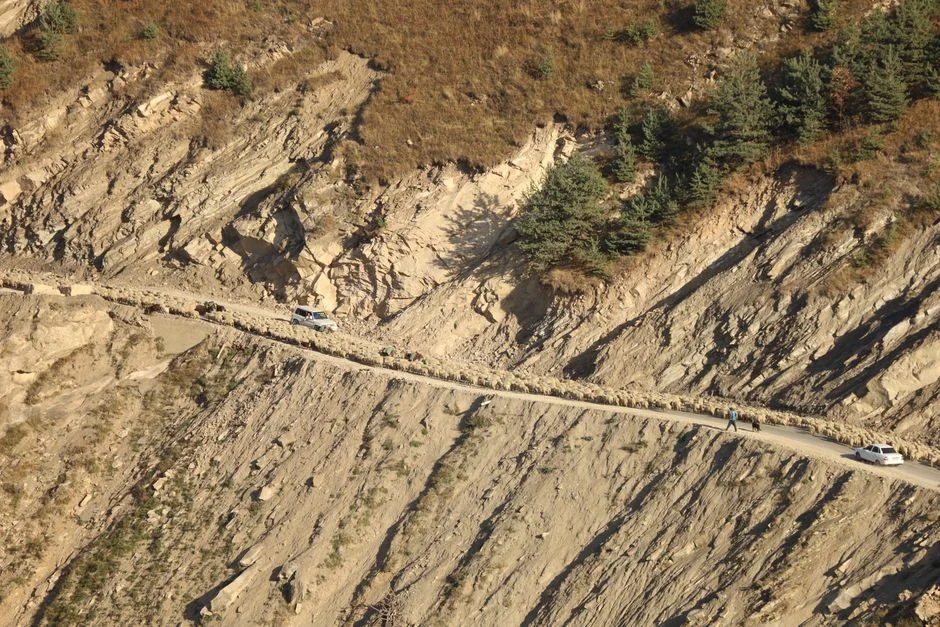
The bus had been travelling from the city of Gilgit towards the capital Islamabad when it left the Karakoram Highway near the town of Chilas, according to police reports from the Gilgit-Baltistan region. The highway cuts through some of the world's most treacherous terrain, winding along cliff faces with minimal safety barriers.
Rescue Operations Underway
Emergency services reached the crash site within two hours, though rough mountain terrain complicated efforts to bring victims to hospital. Local volunteers joined soldiers from the Pakistan Army's special mountaineering units to evacuate the injured. District Health Officer Dr. Farrukh Shah confirmed that 15 survivors had been admitted to Chilas District Headquarters Hospital, several with spinal and pelvic fractures.
"The bus rolled at least three times before coming to rest against the canyon wall," said one rescue worker who spoke to reporters at the scene but declined to give his name. "We found bodies scattered across a 30-metre radius."
The Pakistan Army confirmed that helicopter evacuation was not possible due to dense cloud cover over the mountain passes. Instead, military trucks transported the most critically injured along the same winding road where the crash occurred.
Survivors Describe the Moment
Among those treated at Chilas Hospital was Muhammad Ismail, a 34-year-old shopkeeper who sat in the rear of the bus. He told hospital staff that the driver had been speeding to make up time after a earlier stop.
"The road was wet from morning rain and he was driving too fast on the curves," Ismail recalled, according to notes from hospital staff shared with local media. "I remember the bus tilting and then everything went dark."
Interior Ministry officials said the bus was licensed for 52 passengers but investigators were still determining the exact number of people aboard at the time of the crash. Many buses on northern Pakistan routes carry standing passengers beyond legal limits.
Deadly Roads in the Northern Mountains
The Karakoram Highway connects Pakistan to China through passes exceeding 4,500 metres above sea level. Steep gradients, loose gravel, and sudden weather changes make it one of South Asia's most hazardous stretches. Government data shows over 1,500 people die in road accidents across Pakistan each year, with mountain highways accounting for a disproportionate share of fatalities.
The Bus Drivers Association of Gilgit-Baltistan acknowledged that long shifts and poor maintenance remain persistent problems. Secretary General Rafiq Ahmed told reporters that many drivers on mountain routes work 14-hour shifts without adequate rest breaks. "The companies push drivers to complete journeys quickly. The roads are dangerous enough without that pressure," he said.
Previous Incidents on the Karakoram Highway
Thursday's crash follows a similar accident in August when a bus fell into a ravine near the same region, killing 11 people. In 2019, a bus collision on the highway resulted in 26 deaths. Safety advocates have repeatedly called for wider road shoulders, concrete barriers along cliff edges, and mandatory rest stops for drivers on extended routes.
Government Response and Investigation
Pakistan's National Highway Authority opened an investigation into the crash and said it would examine whether road conditions contributed to the accident. The authority's spokesperson told reporters that a section of the highway near the crash site had been flagged for barrier improvements last year but work had not yet begun due to funding delays.
Interior Minister Mohsin Naqvi announced that the government would cover funeral expenses for all victims and provide compensation to injured survivors. He also directed transport authorities to conduct immediate safety audits of buses operating on mountain routes.
"No family should lose a loved one because maintenance was skipped or rules were ignored," Naqvi said in a statement released Thursday afternoon. "Those responsible will face consequences."
Hospital Emergency and Community Response
Chilas Hospital, a facility with limited surgical capacity, called for specialist doctors from Islamabad to be airlifted to the region. Provincial Health Minister Dr. Qaiser Ahmed confirmed that a surgical team would arrive Friday morning to assist with complex fracture cases. The hospital's blood bank issued an urgent appeal after supplies ran low treating the multiple trauma cases.
Local residents gathered outside the hospital throughout Thursday evening, some waiting for news of relatives who had been travelling on the bus. Community leaders organised food and shelter for families who travelled from surrounding villages to the district headquarters.
What Comes Next
The investigation into the crash will examine whether the bus exceeded its legal passenger capacity and whether the driver had adequate rest before the journey. Transport company records are expected to be reviewed in the coming days.
Safety advocates say Thursday's crash highlights the urgency of implementing recommendations from a 2022 government report on mountain road safety that called for over 200 safety improvements along the Karakoram Highway. Most of those upgrades remain unfunded. The National Highway Authority has said it will prioritise barriers at high-risk curves in its next budget cycle, but officials have not committed to a specific timeline.
See Also
- Reble Disrupts Indian Hip-Hop — What Changes for Fans
- Sofii Lewis Shares Her Mental Health Journey in Motherhood