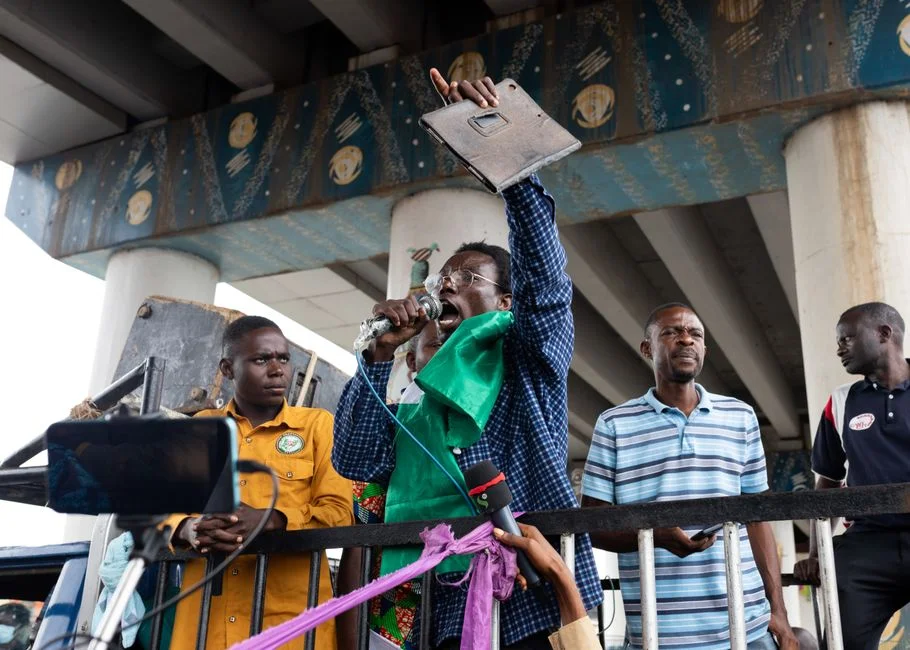
A prominent member of Nigeria's House of Representatives has defected from the main opposition party, dealing a significant blow to its numerical strength just months before critical legislative sessions resume. The move, which has sent shockwaves through political circles in Abuja, underscores the fragility of party loyalty in Nigeria's democracy.
The Defection That Stunned Colleagues
The lawmaker's decision to leave the party came without warning, according to sources within the National Assembly. Colleagues learned of the switch through social media posts rather than formal notification, a breach of political etiquette that has drawn sharp criticism from party loyalists. The abrupt nature of the departure has left the opposition scrambling to assess its impact on parliamentary arithmetic.

Party officials confirmed the defection in a terse statement issued from their headquarters in Abuja, expressing disappointment but stopping short of naming the departing member publicly. The statement warned that such moves undermine the electoral mandate voters entrusted to the party.
Inside the 'Abracadabra' Label
Political observers have long used the nickname "Abracadabra" to describe this particular lawmaker, a reference to a reputation for pulling unexpected political tricks at critical moments. The label has followed the individual through multiple electoral cycles, gaining renewed relevance with this latest maneuver.
Critics within civil society argue the nickname captures something deeper about Nigerian politics: a system where legislative behavior often defies rational explanation and where party affiliations can shift based on factors unrelated to policy or voter interests.
Patterns of Opportunistic Switching
This defection fits a broader pattern in Nigerian politics. Since the return to civilian rule in 1999, political parties have served as vehicles for individual ambition rather than ideological consistency. Legislators routinely cross the floor when personal or regional interests diverge from their party's platform.
The practice has eroded public trust in representative government. Survey data consistently shows Nigerian citizens expressing deep skepticism about whether elected officials actually represent their constituents or merely pursue personal advancement.
Damage to Democratic Institutions
The incident has reignited debate about the structural weaknesses in Nigeria's democracy. Electoral laws mandate that defecting lawmakers lose their seats, but enforcement has proven inconsistent. The National Assembly has repeatedly failed to pass stronger legislation closing loopholes that allow floor-crossing without consequence.
Constitutional lawyers point to Section 68 of the 1999 Constitution, which outlines grounds for disqualification of legislators. However, the enforcement mechanism remains dependent on party loyalty within the chamber itself, creating a circular problem that has never been satisfactorily resolved.
Impact on Legislative Business
The defection arrives at an awkward moment for the opposition, which has been preparing for heated debates on the federal budget and emerging security legislation. With parliamentary numbers now shifted, the ruling party may gain additional leverage in committee assignments and procedural votes.
National Assembly sources indicate that several pending bills were contingent on opposition support for override votes. Staff members working on legislative logistics have been ordered to recalculate voting projections, a task complicated by uncertainty over whether other lawmakers might follow suit.
Grassroots Reactions
In the affected lawmaker's constituency, responses have been mixed. Local party chapters have called emergency meetings to assess damage and mobilize supporters. Some residents expressed anger at what they perceive as betrayal, while others acknowledged that political realities on the ground often differ from Abuja's calculations.
Youth activists in the region have used the moment to renew calls for stronger recall mechanisms, arguing that voters should have direct power to remove representatives who abandon their campaign promises. Such mechanisms exist in theory but have never been successfully deployed in Nigeria's history.
What Comes Next
The defector's next moves remain unclear. Reports suggest overtures have been made to multiple parties, though no formal announcement about future political affiliation has emerged. Political watchers in Abuja expect clarity within the coming weeks as the lawmaker positions themselves for the next electoral cycle.
The opposition party faces a critical decision about whether to challenge the defector's seat in court. Such battles are expensive, time-consuming, and historically uncertain in their outcomes. Party strategists are reportedly weighing whether judicial action would strengthen their democratic credentials or merely generate more negative publicity.
For Nigerian citizens watching from outside the political bubble, the episode reinforces familiar frustrations about a system that prioritizes individual maneuvering over collective governance. The next federal election remains over two years away, but the defection has already reshaped the landscape that candidates and parties must navigate.
See Also
- Italy’s Post Office Slams May Bills on Citizens Without Invoices
- Trump’s Tariff Wars Force India to Pivot Its Entire Economic Strategy
However, the enforcement mechanism remains dependent on party loyalty within the chamber itself, creating a circular problem that has never been satisfactorily resolved.Impact on Legislative BusinessThe defection arrives at an awkward moment for the opposition, which has been preparing for heated debates on the federal budget and emerging security legislation. Reports suggest overtures have been made to multiple parties, though no formal announcement about future political affiliation has emerged.