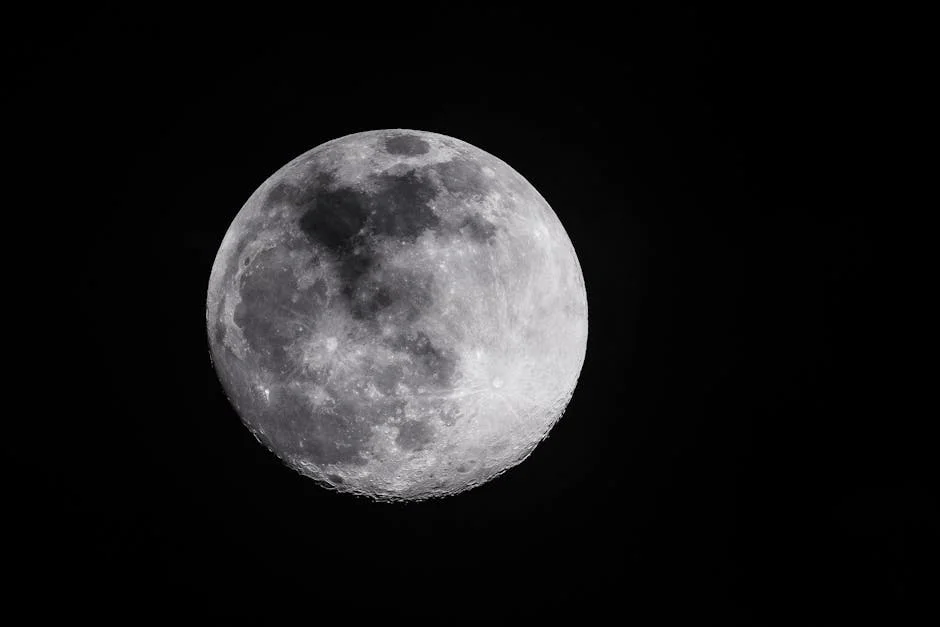
NASA has released its first images from a recent Moon fly-by, capturing a rare Earthset — the moment Earth disappears below the Moon’s horizon. The images, taken on 21 October 2024, show the Earth as a glowing blue sphere against the black void, offering a new perspective on our planet’s place in space. The event was part of the agency’s ongoing Artemis program, aimed at deepening lunar exploration and preparing for future missions to Mars.
What is Earthset and Why It Matters
Earthset, often called the lunar counterpart to Earthrise, occurs when the Earth is seen from the Moon’s surface as it sets below the horizon. Unlike Earthrise, which was famously captured during the Apollo 8 mission in 1968, Earthset is a rare phenomenon that requires precise orbital positioning. The recent images, captured by NASA’s Lunar Reconnaissance Orbiter (LRO), mark the first time the agency has documented this event in high-resolution detail.
Dr. Sarah Mitchell, a planetary scientist at NASA’s Jet Propulsion Laboratory, explained the significance. “Earthset offers a unique view of our planet from the Moon’s surface. It helps us understand how Earth appears from a different vantage point, which is crucial for future lunar missions and space exploration.”
How This Affects Indian Citizens and Communities
For Indian citizens, the release of these images has sparked renewed interest in space exploration and science education. The Indian Space Research Organisation (ISRO) has been closely following NASA’s findings, with officials noting the potential for collaboration on future lunar missions. In cities like Bengaluru and Hyderabad, where tech and science hubs thrive, the images have been widely shared on social media, inspiring young students and researchers.
“These images remind us of how interconnected we are with the universe,” said Ravi Mehta, a science teacher in Pune. “They encourage students to think beyond their daily lives and consider the bigger picture.”
Local Reactions and Educational Impact
Local schools and science museums in India have used the images to engage students in astronomy and space science. The Birla Planetarium in Kolkata hosted a special session on 24 October, where experts discussed the significance of Earthset and its implications for future space travel. Over 500 students attended, with many expressing a newfound interest in space-related careers.
“This is a moment that can inspire the next generation of scientists and engineers,” said Dr. Priya Kapoor, a science educator in Mumbai. “It’s not just about looking at images — it’s about understanding the science behind them.”
Global Collaboration and Future Missions
The release of the Earthset images has also highlighted the growing trend of international collaboration in space exploration. NASA is working closely with ISRO and other space agencies to develop joint missions, including plans for a lunar research station by 2030. The data from the recent fly-by will be shared with global partners to enhance understanding of the Moon’s environment and its potential for human habitation.
The images have also been shared with the European Space Agency (ESA) and the Japan Aerospace Exploration Agency (JAXA), with scientists from these organisations analysing the data for further insights.
What to Watch Next
Indian space enthusiasts and scientists are closely watching NASA’s upcoming lunar missions, including the Artemis II test flight scheduled for 2025. This mission will be the first to send astronauts around the Moon since the Apollo era. ISRO is also set to launch its Chandrayaan-3 mission in early 2025, which aims to explore the Moon’s south pole for water ice and other resources.
As the world continues to look to the Moon, the recent Earthset images serve as a reminder of the importance of space exploration. For Indian citizens, they offer both inspiration and a glimpse into the future of science and technology in the country.