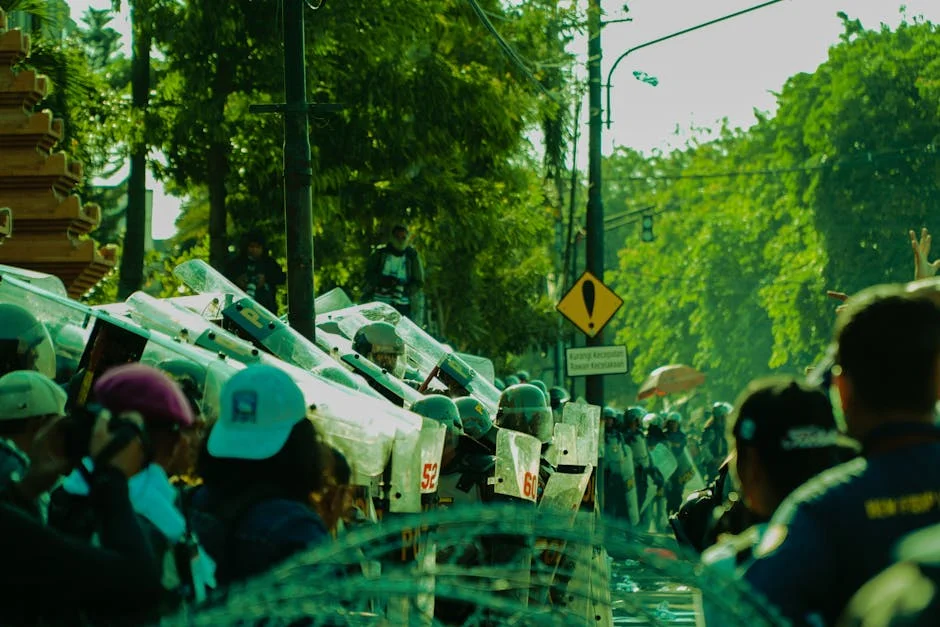
Bengal's Kharagpur region has become a battleground as local communities, government officials, and private developers clash over land rights and development plans. The conflict, which began with a 2016 breakthrough in land reform, has escalated into a high-stakes battle that directly impacts residents, farmers, and small businesses. The tension is rooted in a long-standing dispute over land ownership and the allocation of resources, with the state government and local activists at odds over how to balance growth with community interests.
The 2016 Breakthrough and Its Aftermath
The 2016 land reform initiative, led by the West Bengal government, aimed to resolve decades of land disputes by reclassifying agricultural land and offering compensation to displaced farmers. However, the implementation fell short in Kharagpur, where over 2,000 families reported losing access to their ancestral land without proper compensation. According to a 2023 report by the State Land Reforms Department, only 40% of affected families received the agreed-upon compensation, leading to widespread frustration.

Local activist Anjali Das, who has been advocating for land rights in Kharagpur for over a decade, says the government's failure to deliver on promises has deepened the divide. “The 2016 breakthrough was a step in the right direction, but it was not followed through. People are still waiting for justice,” she said. The situation has led to protests, with community leaders demanding greater transparency and accountability from the state government.
Impact on Daily Life and the Local Economy
The land disputes have had a direct impact on the daily lives of Kharagpur residents, particularly farmers and small business owners. Many families who lost their land have struggled to find alternative sources of income, leading to a rise in migration to urban areas. A 2024 survey by the Kharagpur Economic Research Institute found that 35% of households in the region reported a decline in income over the past five years due to land displacement.
Small businesses, especially those in the agricultural supply chain, have also suffered. Rice traders, seed suppliers, and local cooperatives have seen a drop in demand as farmers lose access to land. “Without land, we can’t grow crops, and without crops, we can’t run our businesses,” said Rajesh Kumar, a local rice trader. “This is not just a political issue—it’s a survival issue for us.”
Community Response and Rising Tensions
Community leaders in Kharagpur have taken a united stance against what they describe as a lack of government action. The Kharagpur Farmers’ Union, a group representing over 5,000 members, has organized regular demonstrations and lobbied for policy changes. In March 2025, the union staged a week-long protest outside the state capital, demanding a review of the 2016 land reform policies.
The situation has also sparked a debate over the role of private developers in the region. Several real estate companies have been accused of acquiring land through dubious means, often without proper consultation with local residents. “The government is not protecting its people,” said local councilor Suman Ghosh. “Instead, they are enabling corporations to exploit vulnerable communities.”
Political Dynamics and Regional Implications
The conflict in Kharagpur is not isolated—it reflects broader political and economic tensions within West Bengal. The state government, led by the Trinamool Congress, has faced criticism from opposition parties and civil society groups for its handling of land disputes. Meanwhile, the opposition Bharatiya Janata Party has used the issue to rally support, accusing the ruling party of neglecting rural communities.
Analysts say the situation in Kharagpur could have wider implications for the region’s political landscape. “This is a microcosm of the larger struggle between development and equity,” said Dr. Priya Mukherjee, a political scientist at Jadavpur University. “If the government fails to address these concerns, it could face significant backlash in upcoming elections.”
What Comes Next? The Path Forward
As the political and social tensions continue to rise, the next few months will be critical for Kharagpur. The state government has announced plans to revisit the 2016 land reform policies, with a public consultation scheduled for late May 2025. Activists and community leaders are urging the government to include local voices in this process, warning that failure to do so could lead to further unrest.
For now, the people of Kharagpur remain on edge, watching closely as the battle over land rights unfolds. The outcome of this high-stakes conflict will not only determine the future of the region but also set a precedent for similar disputes across West Bengal. What happens next could shape the lives of thousands for years to come.