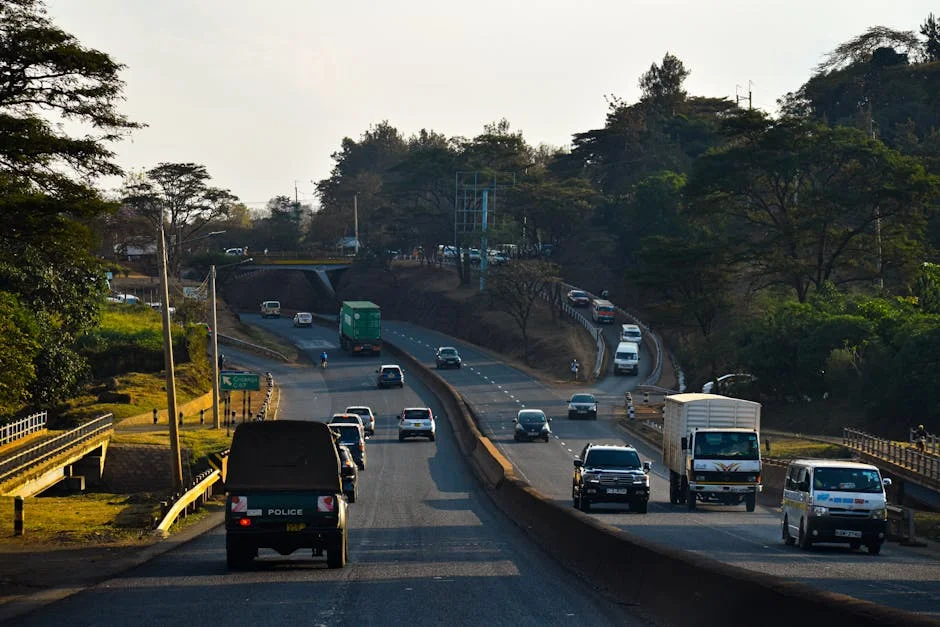
Nigeria’s President Bola Tinubu has officially inaugurated the Ojota-Opebi Link Bridge in Lagos, a major infrastructure project aimed at easing chronic traffic congestion in the country’s economic hub. The bridge, which opened on Monday, connects the Ojota and Opebi areas, two of the most densely populated and commercially active districts in the city. The project, funded by the Lagos State Government and supported by federal agencies, is part of a broader effort to modernise the city’s transport network.
Key Infrastructure Boost for Lagos
The Ojota-Opebi Link Bridge spans 2.8 kilometres and includes two lanes in each direction, with dedicated lanes for motorcycles and emergency vehicles. The bridge, which was completed in 18 months, is expected to reduce travel time between Ojota and Opebi by up to 40 per cent. Lagos State Governor Babajide Sanwo-Olu, who attended the inauguration, called the bridge a “game-changer” for the city’s traffic challenges. “This is not just a bridge; it is a symbol of progress and a step towards a more efficient Lagos,” he said.

The project was delayed for several years due to funding issues and logistical challenges. However, the Lagos State Ministry of Works and Infrastructure managed to secure additional funding from the federal government and private sector partners. The bridge is also equipped with smart traffic management systems, including automated toll gates and real-time traffic monitoring, to ensure smoother operations.
Impact on Daily Commutes and Local Businesses
For residents of Ojota and Opebi, the new bridge is a welcome relief. Amina Hassan, a teacher from Opebi, said the daily commute to her school in Ojota used to take over an hour. “Now, it takes less than 20 minutes. This will save me a lot of time and stress,” she said. Similar sentiments were echoed by traders in the Ojota market, who reported that the bridge has already improved access to their businesses, reducing the time it takes for goods to be transported into the area.
The local economy is also expected to benefit. The Lagos Business Development Centre, which supports small and medium enterprises, reported that over 1,500 businesses in the Ojota and Opebi areas could see increased foot traffic and operational efficiency due to the new infrastructure. “This is a much-needed boost for the local economy,” said Bode Akinwumi, a representative from the centre.
Challenges Remain for Other Areas
Despite the positive developments, not all residents are convinced the bridge will solve Lagos’ traffic problems. Many point to the city’s sprawling informal settlements and the lack of public transport alternatives as ongoing challenges. “This bridge is good, but it’s only one part of the puzzle,” said Dr. Chike Nwosu, an urban planner based in Lagos. “We need more investment in public transport and road networks across the city.”
Additionally, the bridge has sparked concerns about increased traffic in nearby areas. Some residents in the adjacent Ikorodu district have reported that vehicles are now diverting to local roads, causing congestion in those areas. The Lagos State Traffic Management Authority has announced plans to monitor traffic patterns closely and implement additional measures if needed.
Long-Term Vision for Lagos’ Transport Network
The Ojota-Opebi Link Bridge is part of a larger vision to transform Lagos into a more livable and efficient city. The Lagos State Government has outlined plans for several other infrastructure projects, including the expansion of the Lagos-Ibadan Railway and the development of a new rapid transit system. These projects are expected to be funded through a mix of public and private investment.
President Tinubu, who has prioritised infrastructure development in his administration, has also announced plans for additional bridges and road expansions across the country. “Lagos is the economic engine of Nigeria, and we must ensure it runs smoothly,” he said during the inauguration. The government has set a target to complete all major infrastructure projects by 2025, with a focus on improving mobility and reducing urban congestion.
What to Watch Next
The next major development will be the implementation of the Lagos Rapid Transit System, which is scheduled to begin in early 2025. This project, which includes a 42-kilometre rail network, is expected to connect key commercial and residential areas across the city. Meanwhile, the Lagos State Government has pledged to conduct a comprehensive review of the city’s transport policies by the end of the year to identify further improvements.
For now, the Ojota-Opebi Link Bridge offers a tangible example of progress in Lagos’ ongoing efforts to address its infrastructure challenges. As the city continues to grow, the success of this project could serve as a model for future developments across Nigeria.