Surat, the city that polishes nearly 90 percent of the world's diamonds, has crossed a threshold that would have seemed impossible a decade ago. Lab-grown gems now account for half of the city's polished diamond exports, a seismic shift that is rewriting the economics of a trade once defined entirely by stones pulled from the earth. For the tens of thousands of workers who cut, polish, and trade diamonds in this Gujarat port city, the transformation is not abstract — it is their livelihoods changing in real time.
A Diamond Capital Reinvented
Surat's rise as the global centre for diamond processing began in the 1960s, when workshops migrated from Mumbai seeking cheaper labour and available space. Over the following decades, the city built an ecosystem of cutters, traders, and exporters that made India the world's largest diamond-cutting nation. Families passed skills down through generations. Entire neighbourhoods survived on the rhythm of the trade.
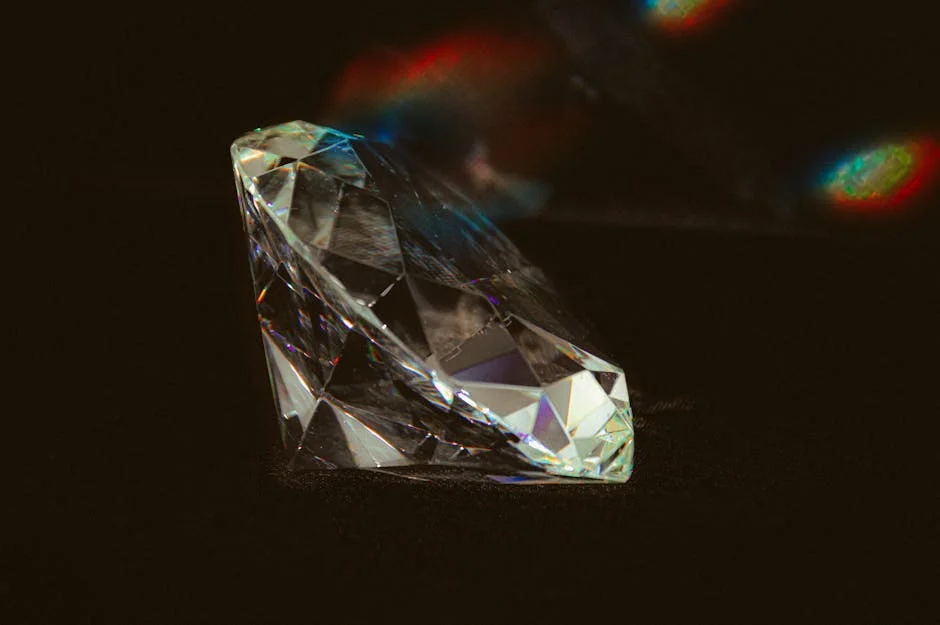
That model faced its first serious challenge when lab-grown diamond technology matured enough to produce gem-quality stones at commercial scale. Manufacturers in Surat initially dismissed synthetic diamonds as a curiosity. That calculation has now reversed entirely. The technology matured. Costs fell. And a generation of Surat's youngest workers proved quicker adopters than their elders.
The Numbers Behind the Shift
The data tells the story starkly. Lab-grown diamonds now represent 50 percent of Surat's polished exports, a share that has climbed steadily from under 5 percent just five years ago. The global lab-grown diamond market, valued at roughly $10 billion in 2023, is projected to reach $26 billion by 2030, according to industry trackers. Surat's manufacturers have positioned themselves to capture much of that growth.
Production costs for lab-grown diamonds have fallen to roughly $300 per carat for gem-quality stones, compared to mining and processing costs that can exceed $1,000 per carat for natural diamonds of equivalent quality. That gap has made synthetic stones suddenly attractive to jewellery retailers and, increasingly, to consumers who once assumed diamonds must come from the ground.
Workers Retrain, Employers Adapt
The cutting and polishing of lab-grown diamonds requires different techniques than working with mined stones. The synthetic material grows in controlled conditions and carries distinct internal stress patterns. Workers must recalibrate pressure, angle, and speed. Foremen at several Surat factories report that younger trainees — many in their twenties — learn the new methods within weeks. Veterans with decades of experience sometimes struggle to unlearn habits built over a career.
Training programmes have sprouted across the city. The Gem and Jewellery Export Promotion Council has backed certification courses specifically for lab-grown diamond processing. One institute in Surat's Mahidharpura neighbourhood enrolled over 2,000 workers last year alone. The programme costs are partially subsidised by the state government, recognising that retraining serves a broader economic interest.
Wages and Working Conditions
Wage structures are shifting alongside the technology. Workers skilled in lab-grown production report earning premiums of 15 to 20 percent over those processing only natural stones. The work is often steadier — synthetic production runs continuously regardless of the mining supply disruptions that periodically tighten the market for natural diamonds. Factory owners note that lab-grown lines have helped keep payrolls stable during periods when rough diamond prices swung unpredictably.
Traders Navigate a Changing Market
Surat's diamond trading community has split. Some established dealers have built inventory and expertise in lab-grown stones, finding new customers among retailers seeking lower price points. Others cling to natural diamonds, arguing that provenance and rarity will preserve value over time. The tension plays out in real negotiations across the city's trading halls.
Consumer preference research from the Bharat Diamond Bourse and industry surveys suggests that younger Indian buyers increasingly view lab-grown diamonds as legitimate options for engagement rings and fashion jewellery. The stigma that once attached to synthetic stones — questions of authenticity, concerns about resale value — has weakened considerably in urban markets. Rural and smaller-town buyers remain more resistant, but that too may shift as prices fall further.
Natural Diamond Suppliers Feel the Pressure
The pivot to lab-grown production has not been cost-free for Surat's relationship with natural diamond suppliers. Botswana, Russia's Alrosa, and De Beers have all watched the shift with concern. India imports roughly $15 billion worth of rough diamonds annually, most of it processed in Surat before export. If synthetic stones capture a larger share of final demand, mining companies face the prospect of declining orders from their largest processing partner.
Some Surat factories have reduced their natural diamond lines by a third or more. The cut-off has been gradual rather than sudden, but the direction is clear. Factory owners who spoke to local media this month described difficult conversations with mining representatives, some of whom have maintained relationships with the same Surat families for decades.
Environmental Arguments Cut Both Ways
Proponents of lab-grown diamonds often cite environmental advantages — no mining disruption, no concerns about conflict origins, lower carbon footprints in some production models. Critics point out that lab-grown production consumes significant electricity, and that the energy source matters enormously for the actual environmental impact. Gujarat's grid relies heavily on coal, which complicates any simple claim of sustainability.
The debate matters for marketing. European and American retailers increasingly demand supply chain transparency on environmental and social grounds. Surat's exporters, many of whom count Europe as their largest market, have begun investing in renewable energy for their lab-grown facilities specifically to meet those expectations.
What Comes Next for Surat
The trajectory appears set. Industry analysts tracking Surat's production figures expect lab-grown diamonds to exceed 60 percent of polished exports within three years. The city that once defined itself by its ability to extract maximum value from every carat of mined stone is learning to build value from a different raw material entirely.
What remains uncertain is how the transition will distribute its rewards and costs. Workers who adapt quickly will find stable employment. Those who cannot or will not retrain face a harder future. Entire business models built around natural diamond expertise are being rewritten. The next twelve months will show whether Surat's institutions — training programmes, trading systems, factory ownership structures — can manage the shift without leaving too many workers behind.
Watch for the results of the Gem and Jewellery Export Promotion Council's annual trade survey, due in April. That data will confirm whether the 50 percent milestone represents a plateau or a waypoint on the path to a diamond industry that looks nothing like the one that made Surat famous.
See Also
- India Rolls Out Red Carpet for Nepal's Lamichhane in Diplomatic Reset
- Bhopal Lawyer Husband Blamed for Wife’s Death in Dowry Row
Critics point out that lab-grown production consumes significant electricity, and that the energy source matters enormously for the actual environmental impact. Some established dealers have built inventory and expertise in lab-grown stones, finding new customers among retailers seeking lower price points.
What is the latest news about surats diamond hub now exports more labgrown gems than mined stones?
Why does this matter for sports?
What are the key facts about surats diamond hub now exports more labgrown gems than mined stones?