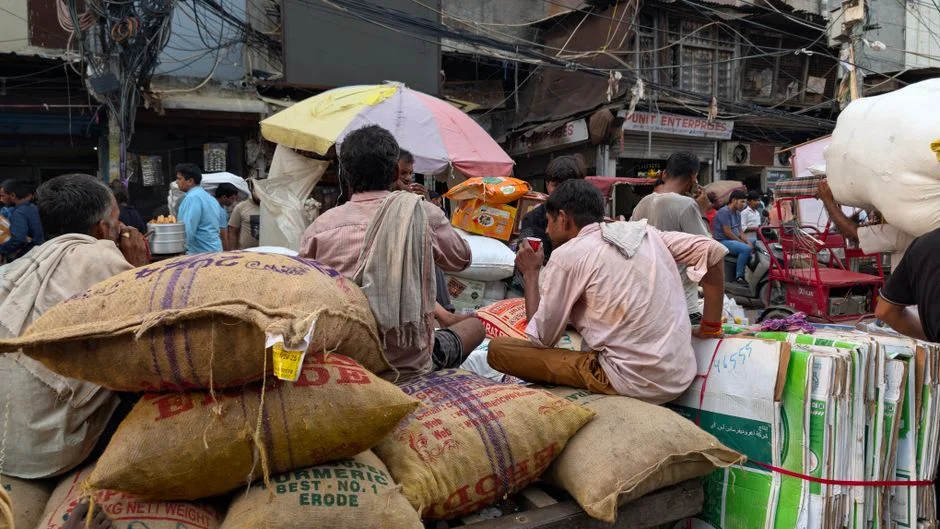
The Federation of Indian Export Houses (FIEH) has formally demanded the removal of the interest subvention cap, arguing that the current limit stifles growth for small and medium-sized enterprises across the country. This push comes at a critical juncture for the Indian manufacturing sector, which faces rising global competition and domestic cost pressures. The decision could reshape how millions of small business owners manage their working capital in the coming fiscal year.
The Core Demand: Lifting the Financial Brake
Indian exporters are facing a liquidity crunch that threatens to slow down production lines in key industrial hubs like Gujarat, Maharashtra, and Tamil Nadu. The central bank’s interest subvention scheme offers a 2% reduction in interest rates for exporters who repay their bills within 90 days. However, this benefit is currently capped at a specific percentage of the turnover, which many small players argue is no longer sufficient. The FIEH contends that this cap acts as a ceiling on growth, preventing smaller firms from scaling up efficiently.
For a typical textile exporter in Surat or a garment manufacturer in Tirupur, every percentage point in interest savings translates directly into higher profit margins or the ability to reinvest in machinery. The current cap means that once a company exceeds a certain turnover threshold, the marginal cost of borrowing increases sharply. This creates a disincentive for expansion, forcing many businesses to stay small to remain eligible for the full benefit. The Federation argues that removing this cap would provide the necessary breathing room for these enterprises to compete globally.
Impact on Local Communities and Small Business Owners
The ripple effects of this financial policy extend far beyond boardrooms and reach into the daily lives of workers and local suppliers. In regions heavily dependent on exports, such as the apparel clusters in South India, small business owners are the backbone of the local economy. These entrepreneurs often rely on short-term credit to purchase raw materials like cotton, yarn, and dyes. When the cost of borrowing rises, they have less cash flow to pay their workers and local vendors on time.
Community leaders in these industrial towns have noted that financial stress on small exporters directly impacts local employment stability. If a small exporter struggles with cash flow, they may delay payments to local transporters, warehouse operators, and even small subcontractors. This creates a chain reaction of delayed wages and reduced purchasing power in the local community. By easing the interest burden, the policy change could help stabilize incomes for thousands of families in these export-dependent regions.
Challenges for Micro and Small Enterprises
Micro and small enterprises (MSMEs) are particularly vulnerable to changes in credit costs. Unlike large conglomerates, these smaller firms often lack the bargaining power to negotiate better loan terms with banks. The interest subvention scheme was designed to level the playing field, but the cap limits its effectiveness for the very businesses it aims to support. Many small exporters report that they are forced to choose between expanding their inventory to meet orders or maintaining cash reserves to service debt.
This dilemma is acute in sectors like leather goods and handicrafts, where production cycles can be lengthy and payment terms from foreign buyers are often stretched. Small business owners in cities like Kanpur and Moradella have expressed concern that without the full subvention benefit, they may have to raise prices or reduce output, both of which could hurt their competitiveness. The Federation’s push for cap removal is thus seen as a direct appeal to protect these small-scale livelihoods.
The Economic Context: Why This Matters Now
The Indian economy is currently navigating a period of moderate growth, with manufacturing playing a pivotal role in driving GDP expansion. Exporters contribute significantly to the country’s foreign exchange reserves, which helps stabilize the rupee against the dollar. Any policy that enhances the competitiveness of Indian exporters is therefore seen as crucial for macroeconomic stability. The interest subvention scheme is one of the most direct tools the government uses to incentivize timely repayments and improve the working capital position of exporters.
Global markets are also becoming increasingly fragmented, with supply chains shifting towards regions like Vietnam, Bangladesh, and Mexico. Indian exporters need every advantage to retain their market share. High interest rates in the domestic market can make Indian goods more expensive compared to those from neighboring countries. By reducing the effective interest rate through subvention, the government can help Indian products remain price-competitive in international markets. This is particularly important for sectors that are highly price-sensitive, such as textiles and engineering goods.
Government Response and Policy Considerations
The Ministry of Commerce and Industry, along with the Reserve Bank of India (RBI), is currently reviewing the feedback from various stakeholder groups. The government is balancing the need to support exporters with the broader fiscal constraints and monetary policy goals. Removing the cap on interest subvention would increase the subsidy burden on the exchequer or require adjustments in the bank lending rates. Policymakers are carefully analyzing the potential revenue impact versus the long-term benefits of export growth.
Officials have indicated that a decision is likely to be announced in the upcoming budget session or through a monetary policy review. The timing is critical, as the export sector is preparing for the festive season and the holiday purchasing cycle in key markets like the United States and Europe. A swift decision would provide clarity to business owners who are planning their production schedules and inventory levels for the next six months. The government’s response will signal its commitment to supporting the manufacturing sector amidst global uncertainties.
What Exporters Are Saying
Leaders from various export houses have echoed the FIEH’s call for reform. They argue that the current cap is arbitrary and does not reflect the changing dynamics of global trade. Many small exporters have shared their stories of struggling to meet repayment deadlines due to delayed payments from foreign buyers. The interest subvention scheme is seen as a lifeline that helps them bridge these gaps. Without it, many fear that they may have to resort to more expensive forms of credit, such as bank overdrafts or invoice discounting.
The sentiment among the exporter community is one of cautious optimism. While they appreciate the government’s efforts to support the sector, they believe that more needs to be done to address the structural issues facing small businesses. The removal of the interest subvention cap is viewed as a tangible step that can provide immediate relief. It is also seen as a signal to the market that the government is listening to the ground-level challenges faced by Indian exporters.
Looking Ahead: Next Steps and What to Watch
The coming weeks will be crucial for the Indian export sector. Stakeholders are closely watching for any official communication from the Ministry of Commerce or the RBI regarding the interest subvention cap. A formal announcement could come as part of a broader package of measures aimed at boosting manufacturing and exports. Businesses are advised to monitor these developments closely, as they may need to adjust their financial planning and credit strategies accordingly.
For citizens and communities in export-dependent regions, the outcome of this policy debate will have direct implications for local economic health. If the cap is removed, it could lead to increased production, higher employment, and greater stability for small business owners. If the status quo remains, small exporters may continue to face financial pressure, which could slow down local economic growth. The next major milestone will be the release of the latest trade data, which will provide insights into how the sector is performing under the current policy framework.
See Also
- All Progressives Congress Disqualifies 14 Candidates Ahead of Reps Primaries
- Former Karnataka MLC Kidnapped at Attibele, Rescued After Extortion Plot