The Middle East crisis escalated on March 15 as attacks on Gulf energy facilities triggered a sharp spike in global oil prices, directly impacting India’s economy and daily life. The strikes, attributed to regional tensions involving Tehran, disrupted supply chains and raised fears of prolonged instability. For Indian citizens, the surge in crude oil prices has already begun to strain household budgets and fuel inflation, with experts warning of broader economic ripple effects.
Oil Prices Skyrocket as Gulf Facilities Attack
On March 15, explosions rocked two key Gulf energy infrastructure sites, including a major refinery in Saudi Arabia and an offshore oil platform in the UAE. The attacks, claimed by a shadowy group linked to Tehran, caused a 12% surge in global oil prices within hours. India, which imports over 85% of its oil, saw diesel and petrol prices jump by 15% in the following week, according to the Ministry of Petroleum. "This is a direct hit to our energy security," said a government spokesperson.
The immediate fallout was felt in cities like Mumbai and Delhi, where long queues at fuel stations became commonplace. Retailers reported rising costs for goods, as transportation and logistics expenses ballooned. "My monthly grocery bill has gone up by 20% since the attacks," said Ravi Mehta, a Delhi resident. "It’s not just fuel—it’s everything." The Indian Oil Corporation confirmed that import costs have surged by $2.3 billion in March alone, exacerbating the country’s trade deficit.
Impact on Indian Consumers and Economy
The oil price shock has intensified inflation, which hit a 7.5% annual rate in February, the highest in over a year. The Reserve Bank of India (RBI) warned that sustained high oil prices could push inflation beyond the 6% target, forcing tighter monetary policies. "This will hit low-income families the hardest," said economist Dr. Priya Kapoor. "Rural areas, which rely heavily on subsidized fuels, are particularly vulnerable."
Small businesses are also struggling. In Ahmedabad, textile manufacturer Anjali Patel reported a 30% increase in operational costs. "We can’t pass these costs to customers without losing sales," she said. The government has announced a temporary subsidy for diesel, but critics argue it’s insufficient. "This is a stopgap measure," said opposition leader Manoj Tiwari. "Without long-term solutions, the crisis will deepen."
Social Unrest and Community Response
Protests erupted in several Indian cities, with citizens demanding price controls and government intervention. In Kolkata, a march of 5,000 people called for an emergency meeting with Prime Minister Narendra Modi. "We’re paying the price for conflicts we didn’t start," said protest leader Alok Kumar. Local NGOs have begun distributing fuel coupons to low-income households, but demand far outstrips supply.
Communities are also adapting. In rural Tamil Nadu, farmers are switching to solar-powered irrigation systems to cut fuel costs. Meanwhile, urban cooperatives are pooling resources to buy bulk fuels at discounted rates. "We’re trying to survive, but the system isn’t helping," said Meera Desai, a community organizer in Pune. The central government has pledged to fast-track renewable energy projects, but implementation remains slow.
Regional Tensions Escalate
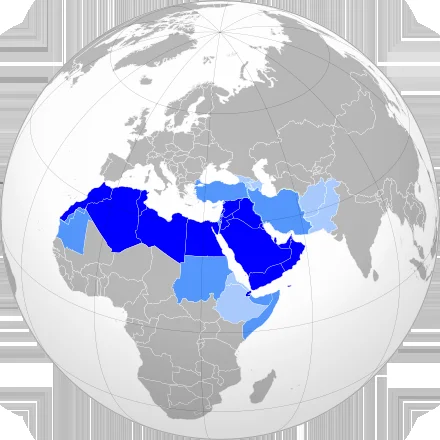
The attacks have heightened fears of a wider Middle East conflict, with Tehran and its allies accused of escalating hostilities. India, a major trading partner of both Gulf states and Iran, faces a delicate balancing act. "Our foreign policy is caught between economic interests and regional stability," said senior diplomat Rajiv Shah. The government has urged restraint but avoided taking sides, citing non-alignment.
Analysts warn that prolonged instability could disrupt India’s $100 billion annual trade with the Gulf. "If shipping routes remain unsafe, we’ll face a supply shock," said Dr. Kapoor. The RBI is considering emergency liquidity measures, while the Ministry of External Affairs is in talks with Gulf leaders to de-escalate tensions. For now, Indian citizens remain on edge, bracing for more volatility in an already turbulent region.
What’s Next for India?
Experts predict oil prices will remain volatile until the Middle East situation stabilizes. The Indian government faces pressure to accelerate its transition to renewable energy, with some calling for a 30% shift by 2030. Meanwhile, the public demands transparency on how foreign policy decisions impact domestic welfare.
"This crisis is a wake-up call," said Dr. Kapoor. "India can’t ignore the Middle East’s role in its economic health." As the region teeters on the brink, the world watches—and Indian citizens brace for the next wave of consequences.